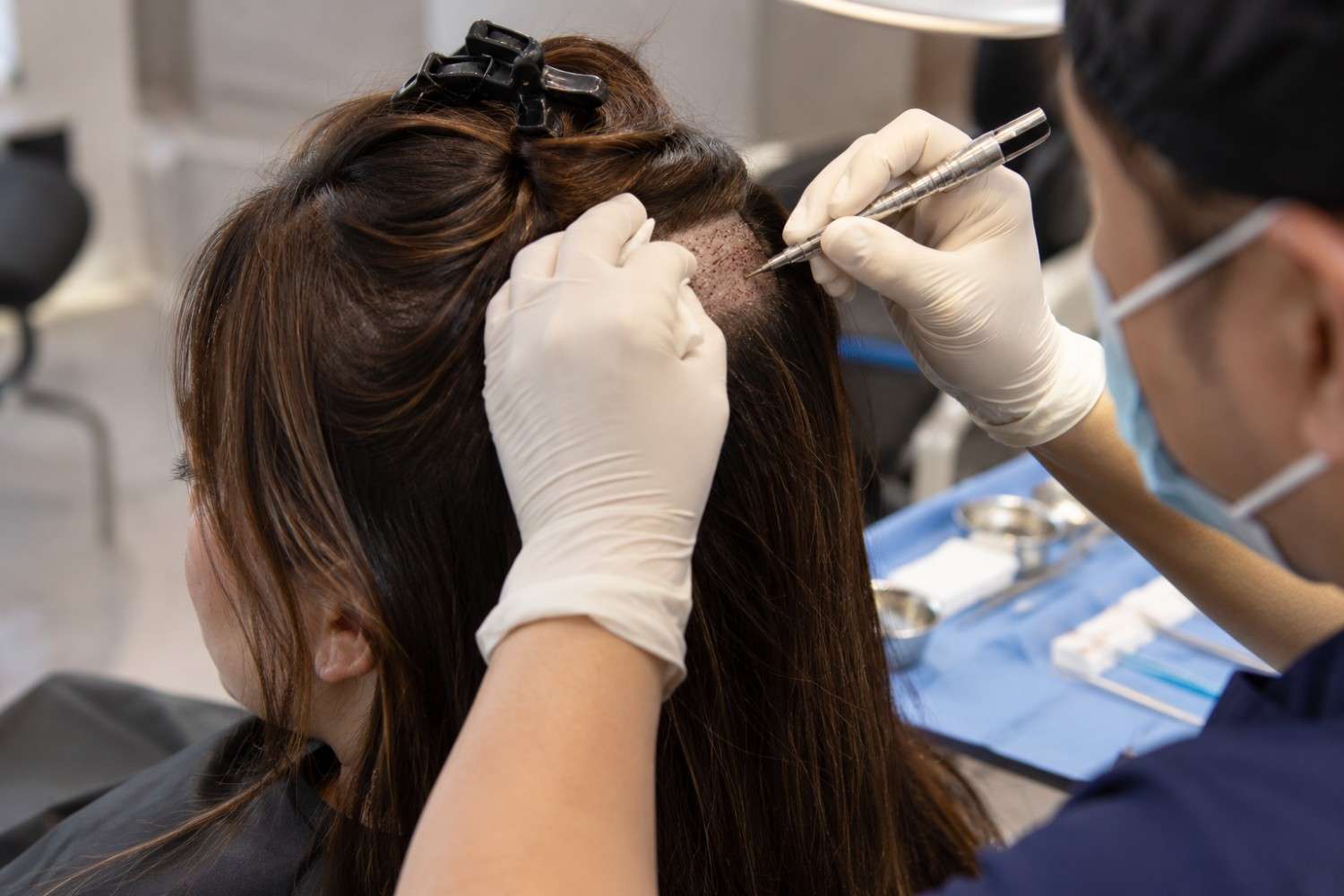
Planning FUE for women with long hair means asking if your donor area needs shaving. You should also ask how your existing hair may cover the treated areas as your scalp heals.
Hair Transplant Long Island offers female hair restoration services, including FUE. During your consultation, ask about trimming, donor hair, costs, and recovery. Share how you wear your hair and any concerns about visible healing.
How Does FUE Work With Long Hair?
Taking Hair From the Donor Area
A surgeon takes small groups of hair roots from the back or sides of your scalp. We call this the donor area. FUE for women with long hair moves these roots to spots with less hair. Each group, called a graft, may hold more than one hair.
Planning Which Hair Needs Trimming
Your surgeon may need to trim some hair, even if you keep most of it long. Long hair FUE planning helps you understand which spots may need trimming. Longer hair around those spots may help cover them, but it may not hide all signs of healing.
Placing Grafts in Thin Spots
The surgeon makes small openings in thin spots and places the grafts there. Each graft’s angle helps shape how the hair grows. Our team can discuss an FUE hair transplant in Long Island and assess your donor hair. We also ask about your goals before we suggest a plan.
Am I a Good Candidate for FUE?
Hair Loss Pattern
We check where your hair has thinned and how long you have noticed changes. FUE for women with long hair may suit some hair loss patterns. We also look for the cause, since some types of hair loss need care before surgery.
Donor Hair Strength
We check the hair at the back and sides of your scalp. Long hair FUE planning includes checking whether these areas have enough strong hair roots. Hair length alone does not show donor strength. We must leave enough hair to keep these areas looking full.
Your Scalp Health
We look for redness, sores, flakes, and signs of scalp disease. Key female FUE considerations include scalp health and whether hair loss remains active. We may suggest care first, so your scalp has time to improve before we discuss surgery.
Treatment Goals
We ask which areas concern you and what changes you hope to see. Our female hair restoration assessment helps us discuss what your donor hair can support. We also explain limits, so you can set clear goals.
Bring these points to your visit
- When hair loss began
- Past hair loss treatments
- Current drugs and supplements
- Areas you want to improve
Will I Need to Shave My Long Hair?
Partial Shaving
A surgeon may trim small patches at the back or sides of the scalp to reach the hair roots. FUE for women with long hair does not always require shaving the whole head. Longer hair above a trimmed patch may help cover it. Coverage depends on hair thickness, patch size, and how you wear your hair.
What No-Shave Means
Clinics may use “no-shave” to describe different methods, so ask what the term means before you choose surgery. Some methods still involve cutting selected hairs or trimming hidden spots. Others keep more hair at its full length. The name alone does not tell you how much hair the surgeon will cut.
Trimming in Thin Spots
The area receiving grafts may also need some trimming. A surgeon may shorten hair to see the scalp and place grafts between existing hairs. Keeping the donor area mostly covered does not mean the treatment area will need no trimming. Ask about both areas, since each serves a different role during surgery.
Agreeing on a Plan
Good long hair FUE planning includes a clear talk about which areas may need trimming and how those spots may look. Our team can assess your hair and discuss the options that fit your needs. Ask us to show the planned areas before treatment. Share how you part your hair and whether visible trimming would affect work or other plans.
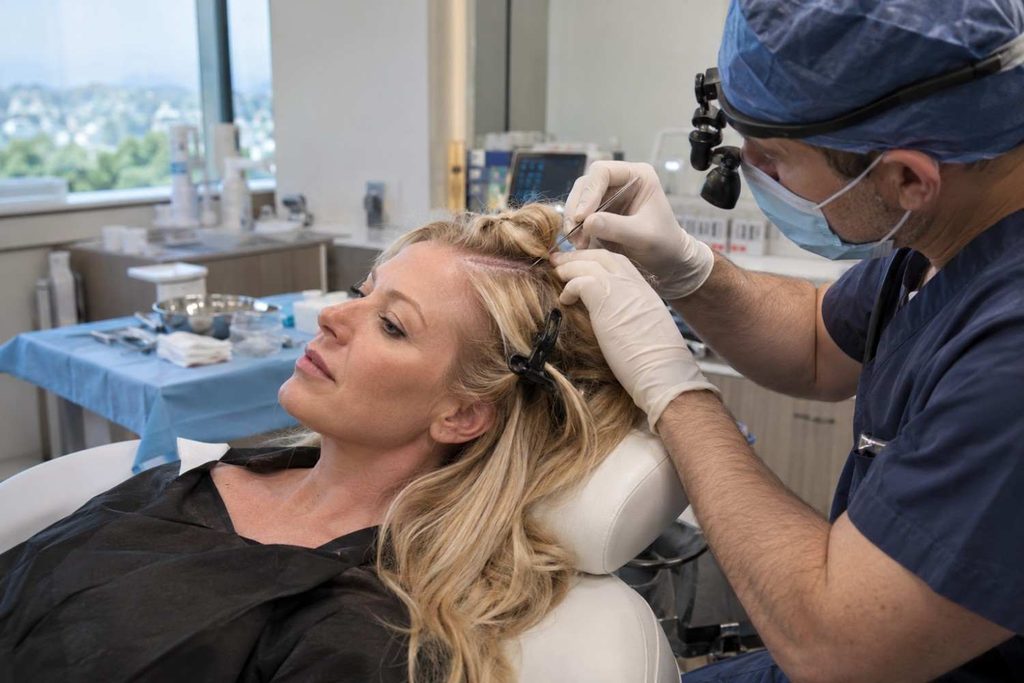
How Many Grafts Will I Need, and What Will It Cost?
Estimating the Graft Count
A graft is a small group of hair roots that may contain more than one hair. FUE for women with long hair requires a graft estimate based on the size and shape of the thin areas. We also check hair thickness and discuss how much coverage you hope to gain.
Checking the Donor Supply
Key female FUE considerations include how much healthy donor hair we can safely use. We check the back and sides of your scalp, since those areas must keep enough hair after surgery. A larger graft count does not always mean a better plan.
Understanding the Price
The cost can depend on the graft count, method, time needed, and services included. Ask for a written quote, so you can review the full cost before making a choice. Do not assume that one price covers all care.
Ask these questions before you agree
- What graft count does the quote cover?
- Does the price include follow-up visits?
- What extra fees could apply?
- Could I need another session?
Who Will Perform Each Part of My FUE Procedure?
Assessment and Planning
Our team includes Dr. Lawrence Barnard, who has training in FUE procedures. FUE for women with long hair starts with checking hair loss and donor hair. Ask who will assess your scalp and approve the plan before you agree to treatment.
Extraction and Graft Placement
Rhonda Daniels, PA-C, has training in graft extraction, site creation, and placement. Key female FUE considerations include knowing who performs each step. Ask who removes the grafts, makes the small openings, and places each graft. We can discuss these roles, so you know what to expect.
Follow-Up Care
Marcelo Acosta, PA-C, has training in hair transplants and experience in patient care. Ask who will check healing and answer questions after surgery. Our team can explain follow-up plans and whom to call if you have concerns during recovery.
What Should I Expect During Recovery?
Work Plans and Visible Healing
Recovery from FUE for women with long hair may involve redness, small scabs, and swelling. Long hair may cover some spots, but it may not hide all signs of healing. Ask how much time to plan away from work. Desk work and jobs with heavy lifting may need different plans.
Washing and Brushing
Important female FUE considerations include how to wash and brush without disturbing new grafts. Follow your surgeon’s written steps for when and how to wash. Ask which shampoo to use and how to dry your hair. Keep brushes away from healing spots until your surgeon clears you. Avoid picking scabs, since this can harm healing skin.
Tying Back Long Hair
Good long hair FUE planning includes asking when you can use hair ties, clips, or bands. Tight styles can pull on healing areas, so wait for your surgeon’s approval. Ask about loose styles that keep hair away from grafts. Take care when moving long strands near treated spots.
Coloring and Follow-Up Care
Wait for your surgeon’s approval before using hair dye, bleach, or other scalp treatments. These products may irritate skin as it heals. Our team can explain follow-up plans and whom to call with concerns. Report worsening pain, spreading redness, fever, or unusual drainage promptly. Follow your care plan even when your scalp starts to look better.
What Results Can I Expect From FUE for Women With Long Hair?
Hair Transplant Long Island can help you set clear goals for FUE for women with long hair. New growth takes several months. Some transplanted hairs may shed first, while early growth may look thin or uneven. Ask your surgeon when to assess fuller results.
Healthy donor hair limits how much coverage surgery can provide. We check hair thickness and the size of each thin spot. A transplant may add coverage, but it cannot promise your former thickness.
Ask to see female cases with hair loss and hair texture like yours. Compare photos with similar lighting and styling. We can explain how those cases relate to your goals, though each person heals and grows hair at a different pace after surgery.
What Risks and Alternatives Should I Discuss?
Surgical Risks
FUE for women with long hair carries risks, including infection, small scars, and uneven growth. Ask how your surgeon reduces these risks. Some hairs may shed after surgery, while some grafts may not grow as planned.
Ongoing Hair Loss
Key female FUE considerations include whether hair loss still affects your scalp. Surgery moves hair roots, but it does not stop every cause of thinning. We can discuss care based on the cause of your hair loss.
Donor Hair Limits
Careful long hair FUE planning includes protecting the hair left in the donor area. Taking too many grafts can leave thin patches. Ask how many grafts your donor hair can safely provide before choosing a plan.
Other Treatment Options
Ask whether PRP for hair loss suits your diagnosis. It uses part of your blood in scalp injections. We may also discuss medicine or monitoring, since some conditions need treatment before surgery.
Ready to Explore Your Hair Options?
Hair Transplant Long Island can help you explore FUE for women with long hair. We can assess your hair loss, discuss trimming concerns, and explain what treatment may involve. Contact us to schedule a consultation.
FAQs
Can I have FUE without shaving my whole head?
Some FUE methods involve trimming small areas rather than shaving the whole head. Ask our team which options suit your hair. Keeping long hair does not mean you can avoid all trimming.
Can my long hair hide the treated areas?
Long hair may cover trimmed donor spots, depending on its thickness and how you style it. It may not hide all redness or scabs. Ask where trimming may occur before surgery.
Is FUE suitable for all women with thinning hair?
No. FUE for women with long hair requires healthy donor hair and a clear assessment of the hair loss cause. Some women may need other care before surgery. We can assess your scalp and discuss suitable options.
When can I wash or tie back my hair?
Follow your surgeon’s written instructions for washing and styling. Ask when you can use brushes, clips, and hair ties. Avoid tight styles until your surgeon approves them, since pulling can disturb healing areas.
How long will it take to see results?
New growth develops over several months. Some transplanted hairs may shed before growing again. Early growth can look thin or uneven. Ask your surgeon when to review progress and assess fuller results.