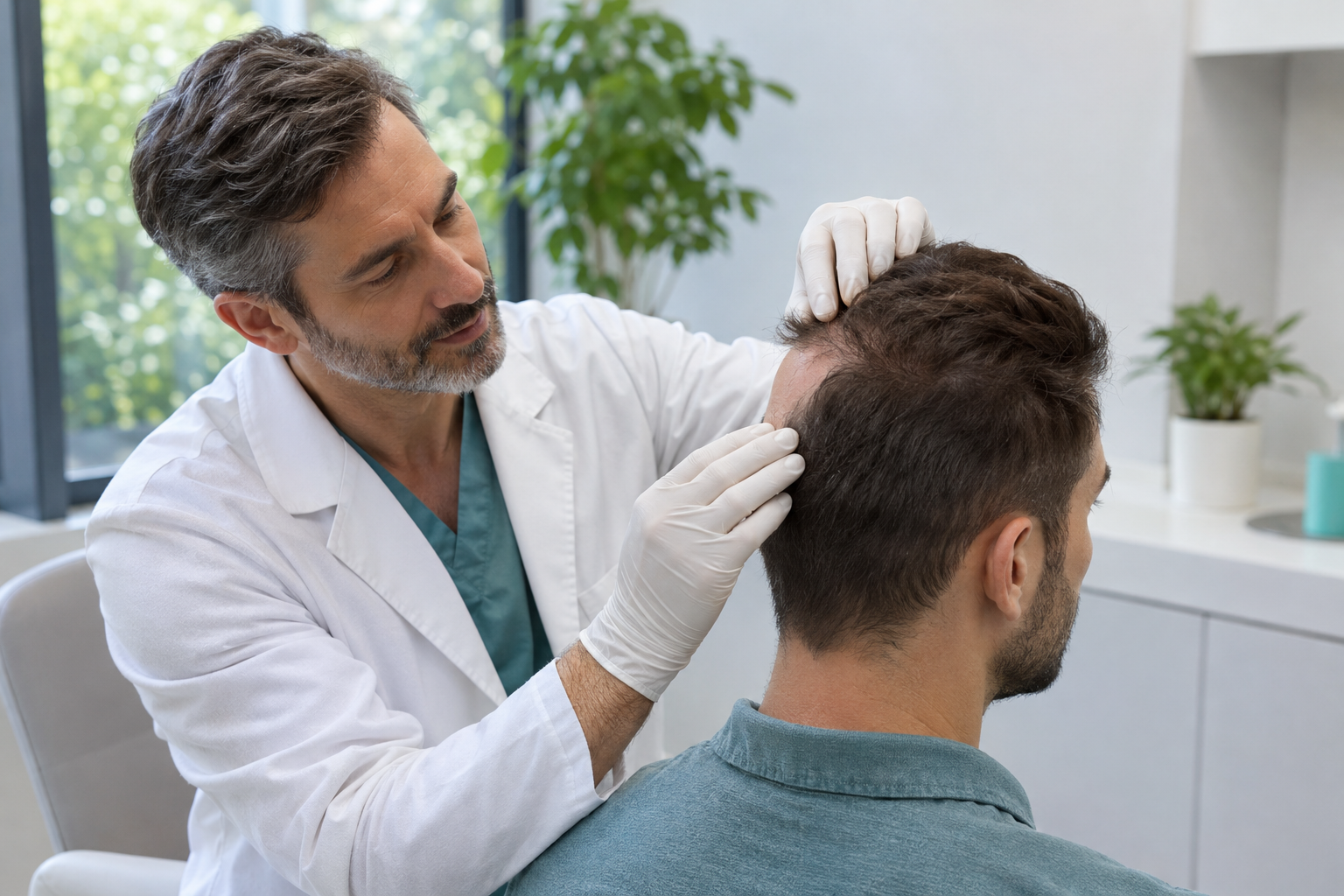
A hair transplant recovery timeline usually moves through two overlapping processes: the scalp heals over the first days and weeks, while transplanted follicles rest, shed their visible hairs, and gradually begin a new growth cycle over the following months. At our Long Island hair transplant center, we explain that these milestones are general. Your procedure, donor area, medical history, graft count, and individual healing response can all affect what you experience.
Always follow the written instructions from the team that performed your procedure. Their directions for washing, medication, sleeping, exercise, and follow-up take priority over any general online guide.
Hair Transplant Recovery Timeline at a Glance
- Days 0–3: Protect the grafts carefully. Mild tenderness, tightness, redness, crusting, or swelling can occur.
- Days 4–7: Early healing continues. Many patients begin a clinician-approved gentle cleansing routine and return to light daily activities.
- Days 8–14: Crusts and visible redness often continue to settle. Non-dissolvable FUT sutures or staples may require removal during this period.
- Weeks 3–8: Transplanted hairs commonly shed. This temporary phase does not necessarily mean that the follicles have been lost.
- Months 3–4: Fine new hairs may begin to appear, although growth can still look uneven.
- Months 5–9: More visible growth and coverage often develop as new hairs lengthen and mature.
- Months 10–18: Density, texture, and overall appearance may continue to improve before the result is assessed.
Hair transplant healing stages do not follow an identical calendar for everyone. Some people feel ready for desk work within several days, while others prefer more time because of swelling, crusting, or the visibility of the treated area.
Days 0–3: Protecting Fresh Grafts
Immediately after surgery, the recipient area contains newly placed grafts and the donor area is beginning to heal. The scalp may feel tight, tender, numb, or mildly achy. Small crusts can form around the graft sites, and swelling may develop across the forehead or around the eyes.
Our team may provide individualized directions about a spray, dressings, approved pain relief, sleep position, and when to begin cleansing. Avoid rubbing, scratching, picking, or placing pressure on the recipient area. Do not direct a forceful shower stream at the grafts or improvise with unapproved products.
Take only medications that your treating clinician has prescribed or approved. If you have questions about a medicine, supplement, topical treatment, or hair-loss medication, contact the clinical team before stopping, restarting, or adding it.
Days 4–7: Gentle Cleansing and Early Healing
During the first week, redness, crusting, itching, and mild sensitivity may still be present. Your clinician may guide you through a gentle washing process that loosens crusts gradually without rubbing or pulling at the grafts. The exact start date and technique vary, so use your postoperative instructions rather than a one-size-fits-all schedule.
Many people can return to light routines during this period, but vigorous exercise, heavy lifting, contact sports, swimming, saunas, and activities that create friction or heavy sweating may still be restricted. Ask your team when each activity is appropriate for you.
If your procedure used follicular unit extraction (FUE), the donor area contains many small extraction sites. These usually begin closing over the first several days, but small scars remain possible. Keep the area clean according to your clinician’s instructions.
Days 8–14: The End of the Early Healing Window
By the second week, crusting and visible irritation often continue to improve. General medical guidance recommends treating transplanted hair very carefully during the first two weeks because graft security develops over time. Do not pick at remaining crusts; let the approved washing routine and natural healing process do the work.
If you had follicular unit transplantation (FUT), the donor area also includes a linear incision. Non-dissolvable sutures or staples are commonly removed by a healthcare professional around 10–14 days, but your surgeon will set the correct appointment. FUT donor-area tightness or tenderness may last longer than the surface crusting in the recipient area.
Return-to-work timing depends on your comfort, procedure, job demands, and how visible the healing area is. A person with a desk job may return sooner than someone whose work involves dust, helmets, strenuous activity, or a risk of scalp contact.
Weeks 3–8: Temporary Shedding Can Be Normal
One of the most surprising hair transplant healing stages is temporary shedding. The transplanted hairs that are visible above the scalp often fall out several weeks after surgery. The follicle can remain beneath the skin and enter a resting phase before producing a new hair.
This phase is sometimes called shock loss or postoperative shedding. It can also affect some nearby non-transplanted hair. Shedding by itself does not prove that a graft failed, but any sudden change that concerns you should be discussed with your clinical team.
By this stage, the skin may look much calmer even though meaningful hair growth is not yet visible. That gap between surface healing and new growth is why progress should be judged over months rather than days.
Months 3–4: Early Hair Growth After Transplant
Early hair growth after transplant may begin around the third or fourth month. The first hairs can look fine, light, short, or uneven. Different follicles can re-enter the growth phase at different times, so one area may seem ahead of another.
Avoid drawing conclusions from a single close-up photograph. Consistent monthly photos, taken with similar lighting, angle, hair length, and styling, give your clinical team a more useful view of change. Early growth is encouraging, but it is not the final density, texture, or coverage.
Months 5–9: More Visible Growth and Coverage
During the middle months, more transplanted follicles may produce visible hair. Existing new hairs can lengthen, thicken, and become easier to style. The pace varies, and crown growth may appear slower than growth in some frontal areas.
Continue any follow-up plan recommended by your clinician. A transplant redistributes follicles; it does not automatically stop ongoing thinning in non-transplanted hair. Our team may discuss an appropriate longer-term plan based on your diagnosis, health history, and goals rather than assuming that every patient needs the same treatment.
Months 10–18: Maturation and Final Assessment
Many patients see substantial change by about one year, but maturation can continue beyond that point. General guidance places the fuller result window at roughly 10–18 months. Hair caliber, curl, direction, length, and the treated area can influence when the result looks settled.
A final assessment should consider the original plan, graft distribution, donor supply, continued hair loss, and realistic coverage expectations. Additional treatment is not automatic. It requires a fresh clinical evaluation of your goals, scalp, donor area, and long-term hair-loss pattern.
How FUE and FUT Recovery Differ
FUE and FUT share the same central recipient-site priority: protect the newly placed grafts and follow the prescribed cleansing and activity plan. The main difference is how the donor hair is harvested.
- FUE donor healing: Individual follicular units are removed through small punch sites. There is no linear donor incision, but many small scars are possible, and the donor area still needs time and careful care.
- FUT donor healing: A strip of donor tissue is removed and the area is closed, creating a linear scar. The closure may require suture or staple removal and can produce more donor-area tightness during early recovery.
Neither method is universally right for every person. During an individualized assessment, we consider your hair-loss pattern, donor density, hairstyle preferences, medical history, graft needs, and recovery priorities.
When to Contact Your Clinical Team
Some redness, swelling, crusting, itching, tenderness, or temporary numbness can occur after hair transplant surgery. Contact your treating team promptly if symptoms are severe, worsening, or different from the expectations they gave you. Warning signs can include:
- persistent or heavy bleeding;
- worsening or severe pain;
- spreading redness, heat, or rapidly increasing swelling;
- yellow or green drainage, pus, or an unpleasant odor;
- fever or feeling significantly unwell;
- an opening donor incision; or
- significant trauma or pressure to the grafted area.
Seek urgent medical care for breathing difficulty, swelling of the lips, mouth, tongue, or throat, or another sign of a serious allergic reaction.
Hair Transplant Recovery FAQs
When can I wash my hair after a hair transplant?
Washing instructions vary by procedure and clinician. Some medical guidance permits very gentle washing within the first few days, while other protocols begin later. Follow the exact start date, water pressure, products, and technique in your written postoperative plan.
How soon can I return to work?
Some patients return to light or desk work after several days, while others plan one to two weeks away. Your comfort, swelling, visible crusting, procedure type, and job environment all matter.
When can I exercise again?
Light activity may resume before vigorous exercise, but timelines vary. Strenuous exercise can increase scalp blood flow, sweating, and the risk of contact with healing areas. Ask your team about walking, weight training, swimming, contact sports, and helmet use separately.
Is shedding after a hair transplant normal?
Temporary shedding of transplanted hairs commonly occurs after several weeks. New growth may begin around months three to four. Contact your clinician if shedding is accompanied by worsening pain, discharge, spreading redness, or another concerning symptom.
When will I see the final result?
Visible growth usually develops gradually over many months. Some patients see meaningful progress around six to nine months, while maturation may continue for 10–18 months. Your clinical team can interpret your progress in the context of your procedure and treatment plan.
Plan for Recovery Before You Schedule Surgery
A smoother recovery begins with clear expectations. Before surgery, ask who to contact after hours, when to wash, how to sleep, when to return to work and exercise, which products to avoid, and when follow-up visits will occur. Our hair transplant consultation process is designed to review your hair-loss pattern, donor area, medical history, goals, and practical recovery needs.
If you are considering a hair transplant in Huntington or elsewhere on Long Island, request a personalized consultation with our team. We can explain the procedure options, likely healing stages, and a recovery plan tailored to your individual circumstances.
This article provides general educational information and is not a substitute for diagnosis, treatment, or postoperative instructions from your own licensed healthcare professional.